
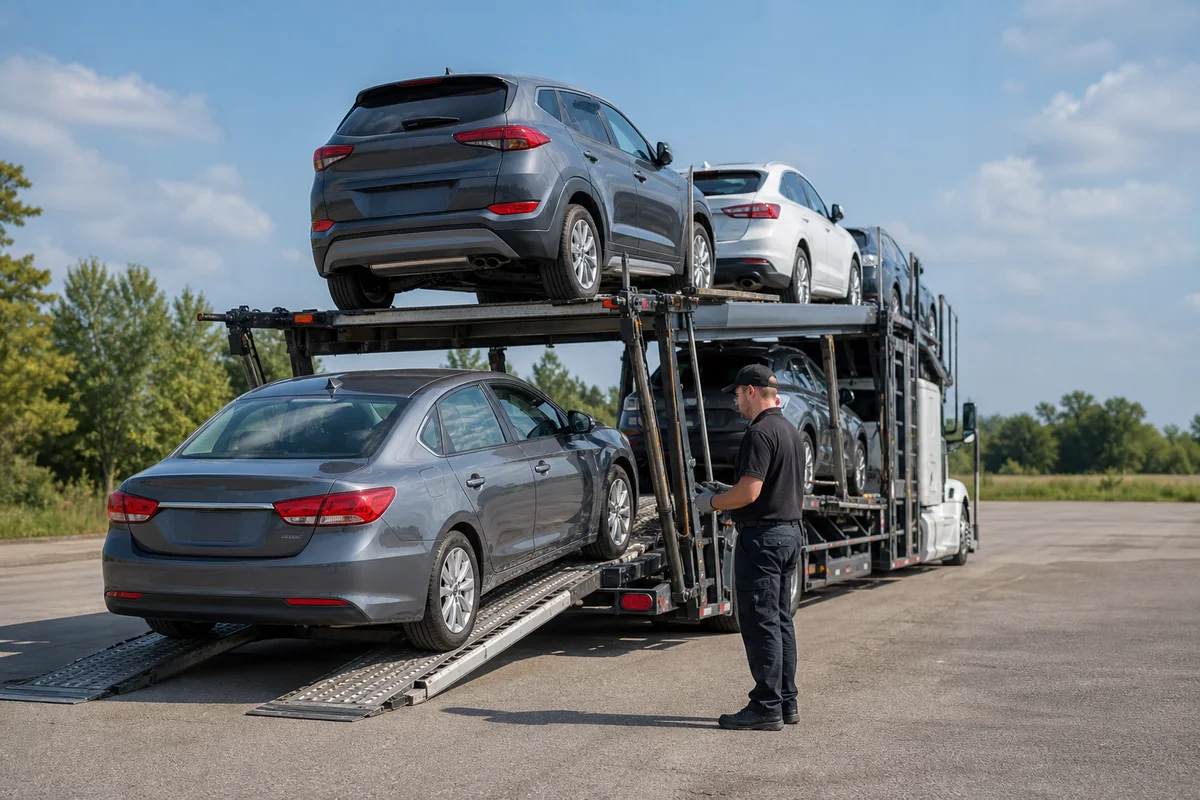
Open auto carrier transporting several passenger vehicles on a daytime route

Open Auto Transport

Reliable Open Car Transport for Everyday Vehicles

We help coordinate open-carrier transportation for eligible passenger vehicles across a wide range of routes and pickup locations.

Compare Transport Options

Open transport may be available for sedans, crossovers, SUVs, minivans, pickup trucks and other eligible vehicles based on dimensions, condition, route and carrier equipment.

Get a Free Quote

Complete in just 3 simple steps

  1. Route & DateTell us where and when
  2. Vehicle DetailsWhat are you shipping?
  3. Contact InfoHow can we reach you?

Route & Date
Transport Type
Vehicle Details
Vehicle Condition
Contact Info

By submitting this form, you acknowledge that Premier Car Hauling may use the information provided to respond to your request in accordance with our Privacy Policy.

Passenger vehicle being prepared for loading onto an open auto carrier

The Standard Carrier Option

What Is Open Auto Transport?

Open auto transport uses a carrier with exposed upper and lower vehicle decks. Multiple eligible vehicles may be transported on the same carrier depending on their dimensions, route and available carrier equipment.

Because the carrier is open, transported vehicles remain exposed to ordinary weather and road conditions during the journey. The assigned motor carrier should document the vehicle’s existing condition at pickup and delivery.

Open transport is commonly considered for everyday passenger vehicles, but final eligibility depends on the vehicle’s size, condition, modifications, route and available equipment.

Why Open Transport?

Why Customers Consider Open Auto Transport

Open transport can be a practical option for many standard passenger vehicles, depending on the shipment details and available carrier equipment.

  • Broad Equipment Availability

    Open carriers are commonly used for standard passenger vehicles, subject to the route, requested pickup window and available carrier equipment.

  • Suitable for Everyday Vehicles

    Sedans, hatchbacks, crossovers, SUVs and many pickup trucks may be eligible depending on their dimensions, condition and modifications.

  • Flexible Route Coordination

    Pickup and delivery may be coordinated across many interstate routes and accessible locations when suitable carrier availability exists.

  • Multi-Vehicle Carrier Capacity

    Open carriers may transport several eligible vehicles based on carrier configuration, weight limits and available space.

  • Vehicle Condition Documentation

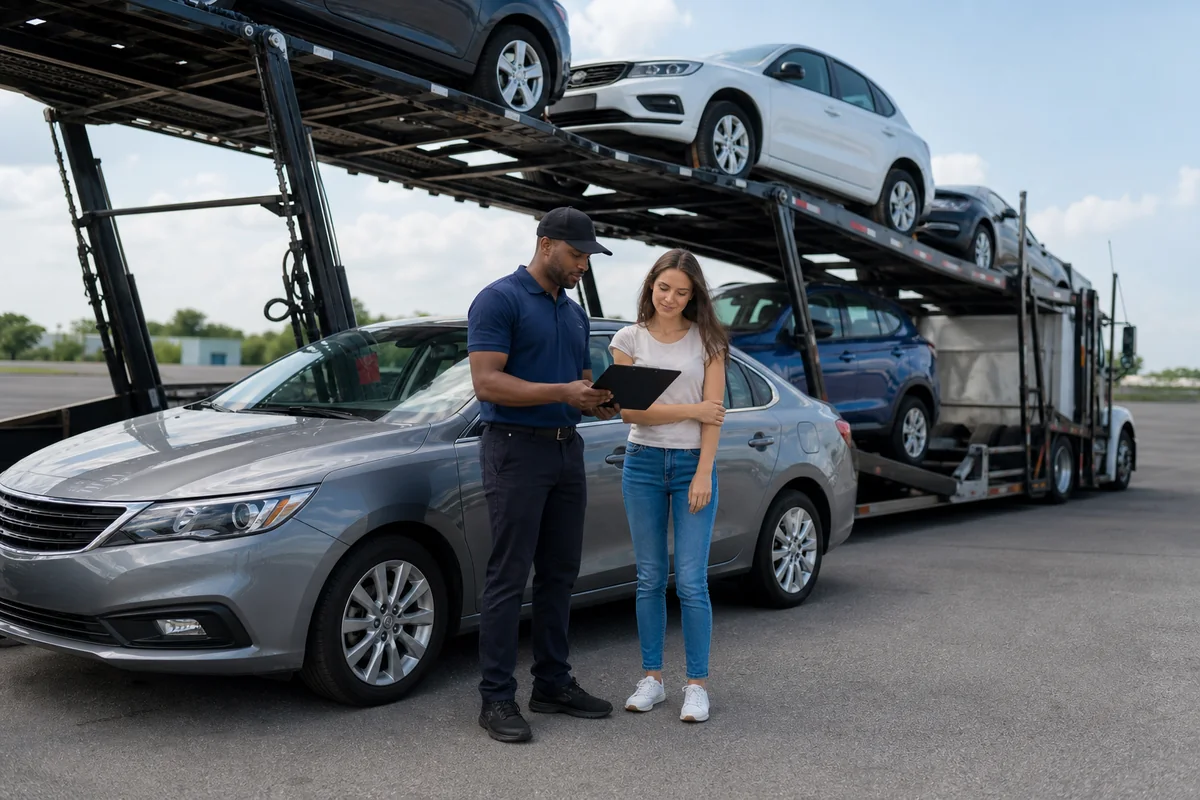
    The vehicle’s existing condition should be reviewed and recorded with the assigned motor carrier at pickup and again at delivery.

  • Door-to-Door Coordination

    Pickup and delivery may be arranged as close as safely and legally possible to the requested locations.

Customer and carrier representative documenting vehicle condition beside an open auto carrier

During Transportation

What to Expect While Your Vehicle Is on an Open Carrier

Open carriers are commonly used for passenger-vehicle transportation, but the vehicle remains exposed to ordinary outdoor and roadway conditions throughout the journey.

  • Ordinary Weather Exposure

    The vehicle may be exposed to rain, sunlight, wind, dust and changing weather conditions while it is transported on an open carrier.

  • Normal Road Exposure

    Open carriers travel on public roads, so transported vehicles may encounter ordinary road dust and environmental debris during the route.

  • Carrier Determines Vehicle Position

    The assigned motor carrier determines where each vehicle is placed based on dimensions, weight distribution, loading requirements and available carrier space.

  • Pickup Condition Documentation

    Review the vehicle with the assigned carrier and document its existing condition on the pickup paperwork or Bill of Lading before loading.

  • Transportation Updates When Available

    Pickup, in-transit and estimated delivery information may be shared by the brokerage or assigned motor carrier as updates become available.

  • Delivery Inspection

    Inspect the vehicle at delivery and compare its condition with the pickup documentation before signing the final delivery paperwork.

Compare Transport Options

Open vs. Enclosed Auto Transport

Both transport types can be used to coordinate vehicle transportation. The main differences involve carrier design, vehicle exposure, equipment availability and the type of vehicle being transported.

Common Carrier Option

Open Auto Transport

Vehicles are transported on an exposed auto carrier and may encounter ordinary weather, dust and roadway conditions during transportation.

Suitable for Many Everyday Vehicles

  • Commonly used for everyday passenger vehicles
  • Open carrier equipment may offer broader route availability
  • Multiple eligible vehicles may share the same carrier
  • Vehicle remains exposed to ordinary outdoor conditions
  • Pickup and delivery condition should be documented

Availability depends on the route, vehicle details, preferred pickup window and available carrier equipment.

Reduced Exposure Option

Enclosed Auto Transport

Vehicles are transported inside a covered trailer, reducing their exposure to ordinary weather and road conditions during transportation.

  • Vehicle travels inside a covered trailer
  • Reduced exposure to weather and roadway conditions
  • May suit classic, luxury, collector or specialty vehicles
  • Carrier capacity and route availability may be more limited
  • Estimated pricing may differ from open transportation

Enclosed transportation reduces outdoor exposure, but it does not guarantee damage-free transportation.

Explore Enclosed Transport

The Transport Process

How Open Auto Transport Works

The process begins with your shipment details and continues through carrier coordination, vehicle inspection, transportation and final delivery review.

  1. 01

    Submit Your Shipment Details

    Provide the pickup and delivery locations, vehicle information, operating condition and preferred pickup window.

    Accurate dimensions and modification details help determine suitable carrier equipment.

  2. 02

    Review the Transport Estimate

    Review the estimated transportation pricing, open-carrier option and applicable shipment terms before confirming.

    Pricing and availability may change based on the route, vehicle and current carrier availability.

  3. 03

    Carrier Pickup and Inspection

    The assigned motor carrier coordinates pickup and documents the vehicle’s existing condition before loading it onto the open carrier.

    Review the Bill of Lading or pickup documentation before the vehicle leaves.

  4. 04

    Delivery and Final Review

    Inspect the vehicle at delivery and compare its condition with the pickup documentation before signing the final paperwork.

    Record any concerns on the delivery paperwork before the carrier leaves.

Ready to Request Transport?

Start Your Open Auto Transport Request

Provide your route, vehicle and preferred pickup details to request a personalized transportation estimate for open-carrier service.

Review the estimated pricing, carrier option and applicable shipment terms before confirming your transportation arrangement.

  1. 01

    Submit Your Shipment Details

    Provide the pickup and delivery locations, vehicle details, operating condition and preferred pickup window.

  2. 02

    Review the Estimate and Options

    Review the estimated transportation pricing, open-carrier option and applicable shipment terms.

  3. 03

    Confirm After Reviewing the Details

    Confirm the transportation arrangement after the shipment information and pickup expectations have been reviewed.